
Our Blog

What's in my mouth? A Rundown of Orthodontic Appliances

August 19th, 2015

Dr. Jones and our team correct the alignment of your teeth and jaws so that you can speak clearly, chew food effectively, and look attractive when you smile. We do this by putting sophisticated gadgets in your mouth. While many of these dental devices look similar, we use a wide variety of orthodontic appliances to straighten your teeth and repair jaw problems.

Orthodontic appliances are devices that move your teeth, change the position of your jaw, or hold your teeth in their finished positions after your braces are removed. These devices may be attached to your teeth or removable.

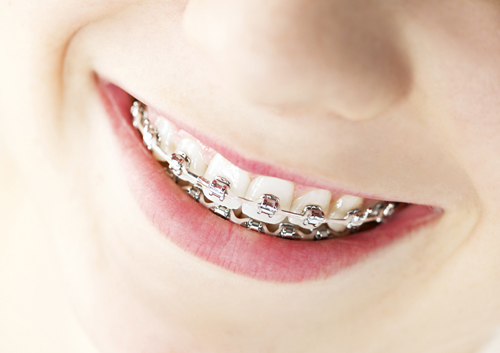
Braces straighten your teeth. Brackets, bands, and wires characterize traditional braces. Braces are attached to the teeth, so they are not easily removable.

Spacers are small plastic rings fitted between your back teeth before your braces are placed by Dr. Jones. These spacers create space between your teeth to optimize the alignment your braces provide.

Retainers hold teeth in their finished position after your braces come off. A Hawley retainer is the most common type of retainer; it features an acrylic plate that rests against the roof of your mouth and a wire crossing in front of your teeth. Essex retainers are quite popular, as they are durable and nearly invisible.

Bite plates correct a deep bite, where the upper front teeth come down too far over the lower front teeth to cause bite problems.

Holding arches prevent the back teeth from moving forward to crowd the front teeth. A lower lingual holding arch prevents your permanent molars from migrating forward. The Nance holding arch maintains space between teeth after you lose baby teeth and before the permanent teeth come in.

A palatal expander widens your upper jaw by separating the bones of your palate. This appliance helps your top and bottom teeth fit together better. The Quad Helix widens your jaws to create more room for crowded teeth.

Contact our Phoenix, AZ office today to learn more about the ways we can improve the appeal and function of your smile.

The Importance of Orthodontic Treatment at a Young Age

August 12th, 2015

When you think of orthodontic treatment, you may automatically assume that it only relates to older children and teens with alignment and spacing issues. But this isn’t the case: Orthodontic treatment at Clark Jones, DDS, MSD offers many benefits when applied at a young age.

By considering orthodontic treatment at a younger age, Dr. Jones and our staff are able to identify your child’s alignment issues early on, and are able to intervene in order to provide treatment as the teeth begin to develop. It is important to start dental care early, not only for proper dental health and the cosmetic benefits, but to improve a child’s overall health as well.

The Benefits of Straighter Teeth

Besides the cosmetic benefits, there are multiple advantages to starting orthodontic treatment at a young age:

  • It can reduce the extent of orthodontic treatment needed later.
  • With early treatment, the pediatric dentist helps guide the teeth into their right position to prevent the removal of teeth and improve an overbite, underbite, or crossbite.
  • Straighter teeth are easier to clean and better for preventing tooth decay.
  • As a benefit to you, the parent, your child’s orthodontic expenses will be much lower with early treatment.
  • Lastly, much early treatment is covered by dental insurance.

Stages of Orthodontic Treatment

Multiple stages are included in early orthodontic treatment, with three stages in all:

The first stage is early treatment that starts around age two or three, and continues until the child is around six years old. This stage deals with preventive measures, such as avoiding bad habits that lead to crooked teeth and creating a plan for the future based on how the teeth are growing in.

During stage two, when the child is six to 12 years old, the first permanent teeth erupt and the dentist looks at possible early treatment for misalignment or bite issues.

Finally, stage three occurs during adolescence to correct any further problems with permanent teeth.

Dr. Jones and our staff are able to see how the teeth first erupt and know right away whether or not your child will need to have braces later on. Early treatment means fewer procedures, cleaner teeth, and less expense.

Orthodontics and Whole Body Health

August 5th, 2015

In recent years, many links have been established between orthodontic treatments and whole body health. According to the National Institute of Dental and Craniofacial Research, researchers have observed that people with gum disease are more likely to develop heart disease or experience difficulty controlling blood sugar than people without gum disease. While researchers continue to find associations between oral health and the overall health of the body, as of yet it hasn’t been determined whether gum disease is the sole cause of these health conditions. What can be determined, however, is that good oral health isn't just about maintaining a healthy smile; it has an impact on the health of your entire body.

The associations between gum disease and whole body health

The links between the health of your mouth and the health of your body are too many to ignore. Is it a coincidence that gum disease and other health problems occur together? Researchers don’t think so, despite the lack of definitive proof.

Here are four possible connections between the health of your mouth and the health of your body.

  • Excessive oral inflammation has been linked to a greater incidence of clogged arteries.
  • The American Society of Microbiology has revealed that certain types of oral bacteria can infect the arterial cells and weaken the wall of the heart.
  • Loose teeth are often believed to be a warning sign for osteoporosis, a disease that causes the bones to become less dense.
  • Some studies suggest women with gum disease are more likely than those without gum disease to deliver preterm, low-weight babies.

Orthodontics and gum disease

So what does undergoing orthodontic treatment at Clark Jones, DDS, MSD have to do with gum disease? Braces do so much more than give you a nice-looking smile. Quite simply, straight teeth are easier to keep clean than crooked teeth. Your toothbrush is able to remove more plaque-causing bacteria, and your floss is more effective at ridding tiny particles between your teeth.

Despite the lack of hard facts in these findings, the message is clear: If you improve your oral health, you will also have a greater chance of maintaining the health of your entire body. And that’s a chance Dr. Jones and our team at Clark Jones, DDS, MSD believe is worth taking. For more information about this topic, please give us a call at our convenient Phoenix, AZ office or ask Dr. Jones during your next visit!

Your Five-Step Guide to Preventing Tooth Decay While Wearing Braces

July 29th, 2015

If you’re wearing braces, then you know they are working hard to straighten your teeth. However, those hard-working braces are also preventing you from easily cleaning your teeth. It is essential that you put some extra attention into preventing tooth decay while wearing your braces. When your braces are finally removed by Dr. Jones, you want a beautiful, white smile, not decayed or stained teeth. Here, we’ve listed the five best ways to ensure you have the smile you’ve always dreamed of once your braces are gone.

Use a Special Toothbrush

A regular toothbrush just doesn’t cut it when you are wearing braces. You also need to use an interdental toothbrush so that you can effectively clean behind the braces. This type of brush has bristles that are shaped like a Christmas tree that can remove food residue in the braces and on the teeth. We also recommend using a WaterPik, with its highly pressurized pulsating water, to help get all of those hard-to-reach places.

Brush after Every Meal

Since braces block food from naturally escaping your teeth after eating, it’s important that you take the time to brush and floss after every meal. The less time food has to sit on your teeth, the less likely it is to cause decay. This may seem like an inconvenience, but trust us, when you get your braces off, you will be very glad you brushed after every meal.

Don't Forget the Mouth Rinse

Even after properly brushing and flossing, there are probably some food particles in your braces. A fluoride mouth rinse is the best way to ensure that every bit of food is removed after meals. If you do not have a mouth rinse available, we suggest using water — it’s better than nothing.

Avoid Sweets

Prevention is definitely the best medicine when it comes to avoiding tooth decay. If you can nix decay-causing sugary foods from the outset, we promise you’ll spend less time trying to treat problems in the future.

Get Regular Checkups

Visit your dentist regularly while you are wearing braces. Our office recommends a thorough cleaning every three to six months. Let our Phoenix, AZ office know if you have questions about your oral health while in braces - our entire team at Clark Jones, DDS, MSD is here to make sure your teeth are as beautifully straight as they are healthy!

request exam